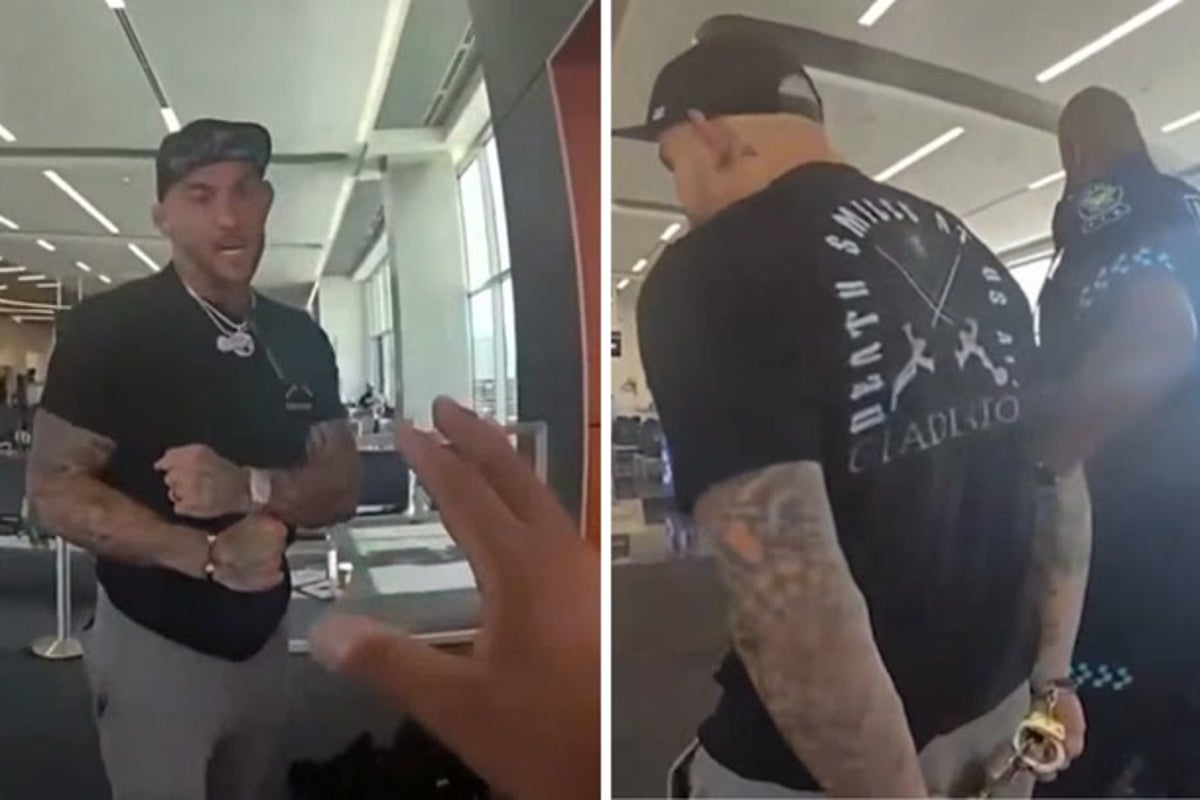
The recent arrest of Dustin Poirier for an episode of alcohol poisoning at an airport in the United States has caused a huge impact within the world of mixed martial arts. However, beyond the incident itself, it has been the subsequent message of the former interim lightweight champion that has generated a much deeper reflection.
Far from looking for excuses, Poirier publicly acknowledged that he is going through a difficult time since he ended his sporting career. He admitted that he needs help and explained that alcohol is not being the answer to the emptiness he feels after leaving the competition. A sincere message that has received the support of numerous teammates and that once again puts on the table a reality that is rarely talked about.
Because the retirement of an elite athlete is not always a happy story.
For years, a wrestler's life revolves around a very specific goal. Training, competing, overcoming injuries, controlling weight, constantly traveling and living with the pressure of risking their future in just a few minutes inside the octagon. That routine ends up becoming an identity. When it disappears from one day to the next, many athletes discover that they no longer know who they are outside of sport.
Poirier himself had acknowledged even before retiring that one of his greatest fears was losing that adrenaline rush that only competing at the highest level offers. After a lifetime of chasing a goal, silence can be deafening.
It is not an isolated case.
One of the best-known examples within the MMA is that of B.J. Penn. Considered one of the best fighters in the history of UFC and a member of the Hall of Fame, the Hawaiian has starred in recent years in numerous worrying episodes related to personal problems, arrests, family conflicts and an evident deterioration of his mental health. His case has served to open a debate on the importance of psychological support when a legend leaves the competition.
Diego Sánchez also experienced a particularly complicated stage after the end of his elite career. For years he was one of the most recognizable faces in the UFC, but his departure from the organization was surrounded by controversies, personal conflicts and obvious emotional exhaustion.
War Machine represents another of the most tragic episodes that the sport has experienced. Although its history is marked by very different circumstances and extremely serious crimes, its fall also showed the extent to which some fighters can completely lose their way when the balance provided by the competition disappears.
Outside the MMA there are equally harsh examples.
Football, athletics, gymnastics, rugby and cycling have been warning for years about the enormous psychological impact of retirement. Many athletes talk about depression, anxiety, loss of identity, isolation and even addiction problems during this transition.
Various scientific studies have shown that retired elite athletes have a higher prevalence of depressive symptoms, anxiety disorders, and substance abuse than the general population. In addition, different studies have also indicated that the risk of suicidal ideation increases in some athletes when the routine, public recognition, and purpose that had guided their entire lives abruptly disappear.
The problem is not always economic.
Many of these athletes are financially stable. What disappears is something much harder to replace: the sense of purpose. For decades they have been defined by a profession that demands extreme sacrifices. One day they stop listening to the public, stop preparing for fights, stop competing, and suddenly they must build a new life from scratch.
In MMA that change can be even harder. Daily training, constant adrenaline rush, discipline and risk are part of the personality of many fighters. Replacing that intensity with a completely normal life is not always easy.
That's why Dustin Poirier's message has been met with such respect. Publicly acknowledging that help is needed remains a difficult step for anyone, especially someone whose career has been based precisely on projecting strength against the best fighters on the planet.
More and more voices within the sport are advocating that preparation for retirement should begin long before the last fight. In the same way that a fighter trains for months for a fight, he should also have psychological tools, professional support and a life project that facilitates the transition to a new stage.
The story of Dustin Poirier is still far from being written. His legacy inside the octagon remains intact and his message can serve to help other athletes who are going through similar situations.
Because, sometimes, the most difficult fight does not begin when the door of the octagon closes. It begins precisely when that door is no longer opened.